
Anterior Minimally Invasive (AMIS) Total Hip Replacement
A minimally invasive, muscle-sparing technique for hip replacement
The anterior approach is one of several surgical techniques used to access the hip joint during total hip replacement. In this approach, the joint is accessed from the front of the body, rather than from the side or back.
This technique is commonly described as muscle-sparing, as it works between natural tissue planes instead of detaching muscles from the bone. By preserving surrounding soft tissues, this approach may support early movement and recovery following surgery.
The anterior approach is one of three widely used techniques for hip replacement, alongside the posterior and lateral (anterolateral) approaches. Each approach provides a different pathway to the joint, and no single technique is suitable for every patient. The most appropriate option depends on a range of factors, including your anatomy, the condition affecting your hip, and your overall health.
Dr Scott Tulloch performs hip replacement surgery using a range of established surgical approaches, including the anterior approach where appropriate. He will recommend the most suitable technique based on a thorough assessment of your hip, your lifestyle, and your recovery goals.
- How the anterior approach accesses your hip joint
- How the anterior approach compares to other hip replacement techniques
- Planning and performing anterior approach hip replacement surgery
- What to expect after anterior approach hip replacement surgery
- When the anterior approach may be recommended
- Long-term outcomes after anterior approach hip replacement
How the anterior approach accesses your hip joint
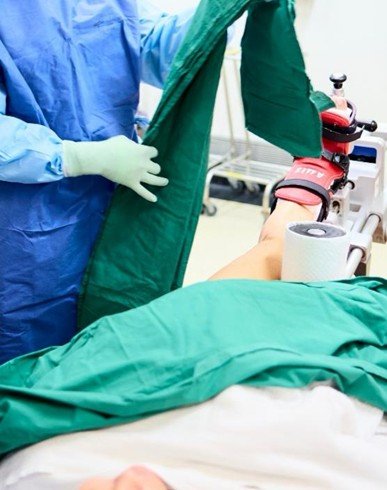
During an anterior approach total hip replacement, the hip joint is accessed from the front of your body, through a small incision made in the front of the hip. This pathway allows Dr Scott Tulloch to work between natural muscle intervals, rather than detaching muscles from the bone.
Beneath the skin, there are defined spaces between muscle groups that can be gently separated to reach the hip joint. By using these natural planes, important muscles and tendons around the hip may be preserved. This can help maintain the stability of the joint and support your early movement after surgery.
Once the joint is reached, the damaged cartilage and bone are carefully removed. The hip socket is then prepared to receive a prosthetic cup, and the thigh bone is shaped to accommodate the femoral component of the hip replacement. Each step is performed with careful attention to alignment, stability, and soft tissue balance.
Throughout the procedure, specialised instruments are used to work through the anterior pathway, allowing clear access to the joint while protecting surrounding structures. Surgical positioning and intraoperative assessment help ensure the hip replacement components are placed accurately.
This approach focuses on reaching the joint efficiently while minimising disruption to surrounding tissues, which may play a role in your early recovery and return to daily activities.
How the anterior approach compares to other hip replacement techniques
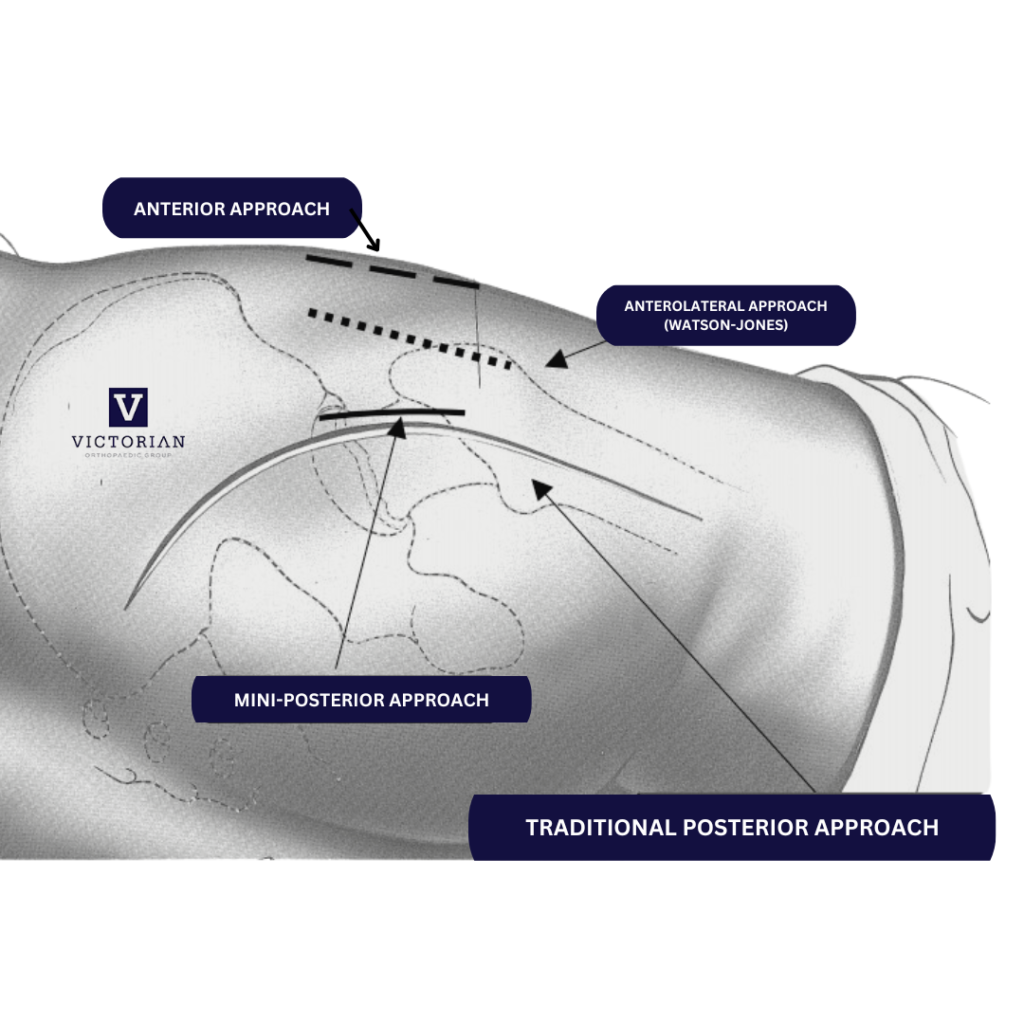
There are several surgical approaches used to perform a total hip replacement, with the anterior, posterior, and lateral (anterolateral) approaches being the most commonly used. Each technique provides a different pathway to the hip joint, and each has its own considerations.
The anterior approach accesses the hip from the front of the body, working between natural muscle planes. In contrast, the posterior approach reaches the joint from the back of the hip, and the lateral approach from the side. These differences influence how the surgeon navigates muscles and soft tissues to reach the joint.
One of the key distinctions is how surrounding tissues are managed. The anterior approach is often described as muscle-sparing, as it works between muscles rather than detaching them. The posterior and lateral approaches may involve splitting or temporarily detaching certain muscles or tendons to access the joint, which are then repaired at the end of the procedure.
Each approach also has different considerations when it comes to joint stability, exposure of the hip, and surgical access. Some techniques may provide wider visibility of the joint, while others prioritise soft tissue preservation. These factors are carefully balanced during surgical planning.
From a patient perspective, recovery experiences can vary. Some patients undergoing the anterior approach may find it easier to begin early movement and return to certain daily activities sooner. That said, recovery is influenced by many factors, including your overall health, the condition of your hip, and your rehabilitation program.
Importantly, there is no single “best” approach for all patients. The most appropriate technique depends on your individual anatomy, your diagnosis, and your functional goals. Dr Scott Tulloch will recommend the surgical approach that best aligns with your needs, ensuring your treatment plan is carefully tailored to support a safe and effective outcome.
Planning and performing anterior approach hip replacement surgery
Careful pre-operative planning is an important part of anterior approach hip replacement surgery. This process typically involves reviewing your X-rays and, in some cases, advanced imaging to understand your hip anatomy, leg length, and joint alignment. These assessments help guide decisions around implant selection, positioning, and the overall surgical plan.
On the day of surgery, you will be positioned on your back, which allows direct access to the front of the hip. A carefully placed incision is made at the front of the joint, and the surgeon works through natural muscle intervals to reach the hip without detaching major muscle groups.
Specialised instruments are used to prepare the joint through this anterior pathway. The damaged cartilage and bone are removed, and the hip socket is shaped to receive the prosthetic cup. The femur (thigh bone) is then prepared to accommodate the stem component of the replacement. Each stage is performed with close attention to alignment, stability, and soft tissue balance.
Throughout the procedure, intraoperative checks are used to assess leg length, joint movement, and implant positioning. These steps help ensure the new joint functions smoothly and feels stable.
The goal of this approach is to combine precise surgical planning with a technique that allows access to the joint while minimising disruption to surrounding tissues. During your consultation, Dr Scott Tulloch will explain how your surgery is planned and performed, and how this approach may be applied based on your individual needs.
What to expect after anterior approach hip replacement surgery
Recovery following anterior approach hip replacement surgery is a structured process focused on pain management, early movement, and a gradual return to daily activities. While every patient’s recovery is different, there are common stages you can expect.
In the early hours after surgery, you will be monitored in hospital as the effects of anaesthesia wear off. Most patients are encouraged to begin gentle movement and walking with assistance on the same day or the following day, depending on your progress.
Your hospital stay is typically short, and you will be supported by nursing staff and physiotherapists to help you move safely, manage discomfort, and begin your rehabilitation exercises. These early movements are important for circulation, joint function, and building confidence.
Once you return home, your focus will shift to gradually increasing your activity levels. A structured physiotherapy program will guide your recovery, with exercises designed to improve strength, mobility, and stability around the hip. Walking is encouraged, starting with short distances and building up over time.
Many patients are able to return to light daily activities within the first few weeks. Tasks such as getting in and out of chairs, walking around the home, and short outings typically become easier as your recovery progresses. Driving and returning to work will depend on your comfort, mobility, and the type of activities involved.
Pain and swelling are expected in the early stages and are usually managed with medication, ice, and rest. These symptoms typically improve as healing progresses.
Recovery timelines can vary based on your overall health, fitness, and the condition of your hip prior to surgery. During your follow-up appointments, Dr Scott Tulloch will monitor your progress and guide your return to normal activities.
The anterior approach may support earlier movement for some patients. Your recovery, however, will always be guided by your individual progress and rehabilitation plan.
Timelines for Recovery Milestones:
- Patients may resume light activities within 4–6 weeks.
- Most individuals return to normal routines within 3–6 months.
Role of Physiotherapy:
- A personalised physiotherapy program helps strengthen muscles, restore mobility, and prevent stiffness.
Restrictions During Recovery:
- Patients should avoid high-impact activities and heavy lifting for several weeks.
- Adhering to weight-bearing and movement restrictions is essential
When the anterior approach may be recommended
The anterior approach may be considered for patients undergoing total hip replacement when it aligns with their anatomy, condition, and functional goals. It is one of several established techniques used to access the hip joint, and its suitability varies from person to person.
This approach may be discussed in situations where preserving muscle and soft tissue structures is a priority, or where early mobility and rehabilitation are important considerations. It may be suitable for patients with hip osteoarthritis, inflammatory joint conditions, or certain types of hip damage requiring joint replacement.
Your overall health, body shape, bone quality, and previous surgery can all influence whether this approach is appropriate. In some cases, alternative techniques such as the posterior or lateral approaches may provide safer or more effective access to the joint.
It is important to understand that the anterior approach is not suitable for every patient. Factors such as complex hip anatomy, prior surgical scars, or specific medical considerations may lead to a different surgical recommendation.
Dr Scott Tulloch will assess your individual situation and discuss the most appropriate surgical approach with you. This decision is based on a comprehensive evaluation of your hip, your lifestyle, and your goals for recovery, ensuring your treatment plan is tailored to your specific needs.
Long-term outcomes after anterior approach hip replacement
The long-term outcomes following anterior approach hip replacement are generally focused on achieving pain relief, improved mobility, and restoration of daily function. As with all hip replacement techniques, the primary goal is to provide a stable, well-aligned joint that supports your long-term activity and quality of life. Many patients experience sustained improvements in their ability to walk, sit, and participate in low-impact activities once recovery is complete. Over time, the hip replacement is designed to function smoothly within the body, allowing you to return to a more comfortable and active lifestyle.
The anterior approach is often associated with preservation of surrounding soft tissues, which may support early recovery. In the longer term, outcomes are influenced by a range of factors including implant positioning, surgical technique, rehabilitation, and your overall health. Modern hip replacement implants are designed for long-term durability, although they do not last indefinitely. Longevity can vary depending on factors such as your activity level, body weight, bone quality, and general health. Some patients may require further treatment or revision surgery over time.
Ongoing physiotherapy, strengthening, and maintaining a healthy lifestyle can play an important role in supporting the long-term function of your hip replacement. Regular follow-up appointments may also be recommended to monitor the condition of the joint over time.
While many patients achieve excellent long-term function, outcomes can vary. Dr Scott Tulloch will discuss what you can reasonably expect based on your individual condition, helping you make informed decisions about your treatment and recovery.