
Knee Fractures
Breaks in the knee bones causing pain, swelling, and loss of joint function
Knee fractures involve a break in one or more of the bones that form the knee joint, including the distal femur (thigh bone), proximal tibia (shin bone), or patella (kneecap). These injuries are typically the result of trauma, such as a fall, sporting injury, or accident.
Fractures around the knee can vary in severity, ranging from small, stable cracks to more complex injuries that affect the joint surface and alignment. Depending on the type of fracture, the injury may impact your ability to bear weight, move the knee, or maintain joint stability.
Common symptoms include pain, swelling, bruising, and difficulty walking, and in some cases, there may be a visible deformity or inability to move the knee. Early assessment is important to determine the type and extent of the fracture, as this helps guide appropriate management and supports recovery of joint function, alignment, and mobility.
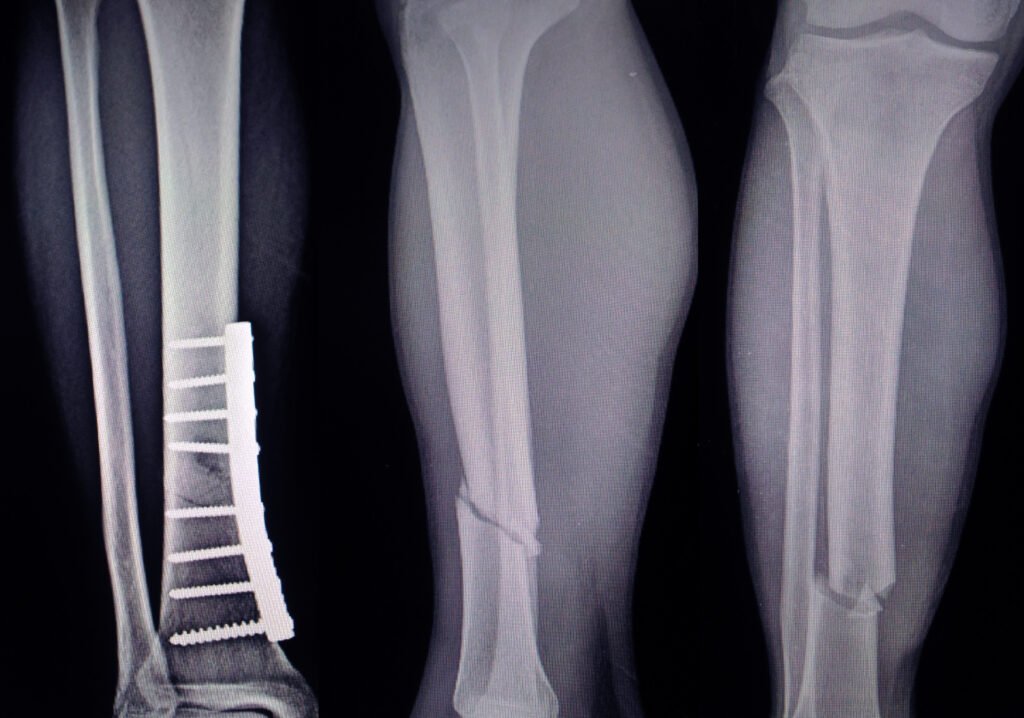
What are knee fractures?
Knee fractures are breaks in one or more of the bones that form the knee joint, including:
- The distal femur (the lower end of the thigh bone)
- The proximal tibia (the upper end of the shin bone)
- The patella (kneecap)
These bones work together to allow the knee to bend, straighten, and bear weight. When a fracture occurs, it can affect the stability, alignment, and movement of the joint. Knee fractures can vary in severity. Some are simple fractures, where the bone remains in position, while others are displaced or complex fractures, where the bone is misaligned or the joint surface is involved. Injuries that affect the joint surface may require more careful management to restore normal function.
These fractures are most commonly caused by trauma, such as falls, sporting injuries, or motor vehicle accidents. In some cases, particularly in older individuals or those with reduced bone strength, fractures may occur with lower-impact injuries. Knee fractures often result in pain, swelling, and difficulty bearing weight, and may significantly limit movement of the joint.
Common causes of knee fractures
Knee fractures are most commonly caused by trauma or direct force applied to the knee joint, although the level of force required can vary depending on bone strength and overall health.
Common causes include:
- Falls, particularly onto a bent knee or directly onto the kneecap
- Sporting injuries, especially those involving high impact, collisions, or sudden force
- Motor vehicle accidents, where significant force is transmitted through the knee
- Direct blows to the knee, such as during contact sports or accidents
In some cases, fractures can occur with lower-impact injuries, particularly when the bone is weakened. This may be seen in:
- Older individuals, where bone density may be reduced
- People with underlying bone conditions, such as osteoporosis
- Situations involving repetitive stress, which may contribute to stress fractures in the bone
The type of fracture often depends on the mechanism of injury, including the direction and magnitude of force applied to the knee.
Symptoms of knee fractures
Common symptoms include:
- Severe knee pain, particularly with movement or weight-bearing
- Swelling and bruising around the knee
- Difficulty or inability to bear weight on the affected leg
- Reduced range of motion, making it difficult or impossible to bend or straighten the knee
- Tenderness over the injured area
In some cases, you may also notice:
- A visible deformity or abnormal shape of the knee
- A feeling of instability or inability to support the joint
- Inability to actively straighten the leg, particularly with patella fractures
Symptoms are often significant and may worsen with any attempt to move or stand. If a knee fracture is suspected, it is important to seek urgent medical assessment, as these injuries may require prompt treatment to restore alignment and protect joint function.
Risk factors for knee fractures
A number of factors can increase the likelihood of sustaining knee fractures, particularly those that affect bone strength, balance, and exposure to trauma.
Common risk factors include:
- High-impact activities or sports, especially those involving contact, speed, or jumping
- Falls, particularly in older adults or those with reduced balance
- Motor vehicle or high-energy accidents, where significant force is transmitted through the knee
- Reduced bone density, such as osteoporosis, which can make bones more susceptible to fracture
- Increasing age, where bone strength and reaction time may decline
Additional contributing factors may include:
- Previous fractures or bone injury, which may weaken the bone structure
- Certain medical conditions, affecting bone health or coordination
- Muscle weakness or poor balance, increasing the risk of falls
- Repetitive stress, which may contribute to stress-related fractures over time
In some cases, knee fractures can occur with relatively minor trauma when underlying bone strength is reduced.
Treatment options for knee fractures
Management of knee fractures depends on the type of fracture, its location, whether the bones are aligned, and your overall health. The aim of treatment is to restore alignment, support healing, and maintain knee function. Non-surgical treatment options may be appropriate for stable fractures, where the bone remains in a good position.
These may include:
- Immobilisation, using a brace or cast to protect the knee while the bone heals
- Restricted or non-weight-bearing, often with the use of crutches
- Pain management, including medications and ice
- Regular follow-up imaging, to monitor healing
These approaches allow the bone to heal naturally while maintaining alignment. If the fracture is displaced, unstable, or involves the joint surface, surgical treatment may be recommended.
This may include:
- Internal fixation, where the bones are stabilised using plates, screws, or rods
- Surgical realignment, to restore the normal position of the joint surfaces
- In more complex cases, procedures aimed at preserving or restoring joint function and stability
The choice of treatment depends on factors such as the severity of the fracture, involvement of the joint surface, and your functional needs.
When to seek urgent medical care for knee fractures
Knee fractures require prompt medical assessment. If you suspect a fracture, it is important to seek urgent care to confirm the injury and begin appropriate management.
You should seek immediate medical attention if you experience:
- Severe knee pain following a fall, collision, or impact
- Inability to bear weight or stand on the affected leg
- A visible deformity or abnormal shape of the knee or leg
- Rapid swelling and bruising around the knee
- Inability to move the knee, or difficulty bending or straightening it
- Open wounds near the knee or bone visible through the skin
It is also important to seek urgent care if you notice:
- Numbness, tingling, or weakness in the leg or foot
- The foot becoming cold, pale, or discoloured, which may indicate circulation concerns
Even if symptoms seem less severe, any significant knee injury with ongoing pain or difficulty moving should be assessed as soon as possible.
Early evaluation allows for appropriate imaging, diagnosis, and treatment planning, helping to restore alignment, stability, and joint function while reducing the risk of complications. If a fracture is suspected, avoid putting weight on the leg and seek care through your nearest emergency department or urgent care service.