
Total Knee Replacement (Arthroplasty)
Replacing the damaged knee joint to improve pain, movement, and overall function
Total knee replacement surgery (arthroplasty) is a procedure used to treat advanced knee arthritis or joint damage, where the natural joint surfaces have worn down and are no longer functioning effectively. The surgery involves removing the damaged cartilage and a small amount of underlying bone from the knee joint and replacing it with specialised implant components designed to allow smoother movement.
This procedure is typically considered when non-surgical treatments, such as physiotherapy, medications, or injections, have not provided sufficient relief, and symptoms are significantly affecting your mobility and quality of life. Total knee replacement aims to reduce pain, improve joint function, and support a return to everyday activities, although outcomes can vary between individuals.
Careful assessment is important to determine whether this procedure is appropriate based on your symptoms, joint condition, and overall health, helping guide a personalised treatment plan.
- What is total knee replacement (arthroplasty)?
- When total knee replacement may be recommended
- Preparing for total knee replacement surgery
- What happens during total knee replacement surgery
- Understanding the risks and considerations
- What to expect after surgery
- Rehabilitation and recovery after surgery
- Long-term outcomes after total knee replacement
What is total knee replacement (arthroplasty)?
Total knee replacement (arthroplasty) is a surgical procedure used to treat advanced knee arthritis or joint damage, where the natural joint surfaces have become worn and are no longer functioning effectively.
The knee joint is formed by the thigh bone (femur), shin bone (tibia), and kneecap (patella). These surfaces are normally covered with smooth cartilage that allows the joint to move freely. When this cartilage is damaged, it can lead to pain, stiffness, and reduced movement.
During total knee replacement surgery:
- The damaged cartilage and a small amount of underlying bone are removed
- The joint surfaces are replaced with specialised implant components
- These components are designed to allow smoother movement and improved joint function
The aim of the procedure is to reduce pain and improve mobility, helping you return to everyday activities such as walking, standing, and climbing stairs.
Total knee replacement is typically considered when non-surgical treatments have not provided sufficient relief and symptoms are significantly affecting your quality of life.
Careful assessment is important to determine whether this procedure is appropriate based on your individual condition, joint changes, and overall health.
When total knee replacement may be recommended
Total knee replacement (arthroplasty) may be considered when knee arthritis or joint damage is advanced and symptoms are significantly affecting your daily life despite non-surgical treatment. This procedure is typically discussed after appropriate conservative management has been trialled, such as physiotherapy, medications, activity modification, or injections, without sufficient relief.
Total knee replacement may be recommended in situations such as:
- Severe knee pain, particularly with walking, standing, or weight-bearing
- Pain that is persistent or affecting sleep
- Reduced mobility or stiffness, limiting your ability to bend or straighten the knee
- Difficulty performing everyday activities, such as climbing stairs or getting up from a chair
- Advanced arthritis affecting multiple compartments of the knee joint
In general, this procedure is considered when symptoms are impacting your quality of life and less invasive treatments are no longer effective.
The decision to proceed with surgery is individual and based on a combination of your symptoms, imaging findings, overall health, and personal goals.
Dr Scott Tulloch will perform a comprehensive assessment and discuss whether total knee replacement may be an appropriate option for your specific condition.
Preparing for total knee replacement surgery
Preparing for total knee replacement (arthroplasty) involves a combination of medical assessment, physical preparation, and practical planning to support a safe surgery and smooth recovery. Before surgery, Dr Scott Tulloch will undertake a comprehensive assessment, including a clinical examination and imaging such as X-rays (and in some cases CT or MRI) to evaluate your knee and plan the procedure.
You will also receive pre-operative instructions, which may include guidance on:
- Fasting prior to surgery
- Managing or temporarily stopping certain medications
- Preparing for your hospital admission
- Organising walking aids, such as crutches or a walker
Optimising your general health before surgery may support your recovery. This can include:
- Maintaining a healthy weight
- Stopping smoking, where applicable
- Managing underlying medical conditions
- Completing a prehabilitation (pre-surgery physiotherapy) program to improve strength and mobility
It is also important to prepare your home environment for your return after surgery. This may include arranging support from family or friends, setting up a safe walking space, and ensuring frequently used items are easily accessible.
What happens during total knee replacement surgery
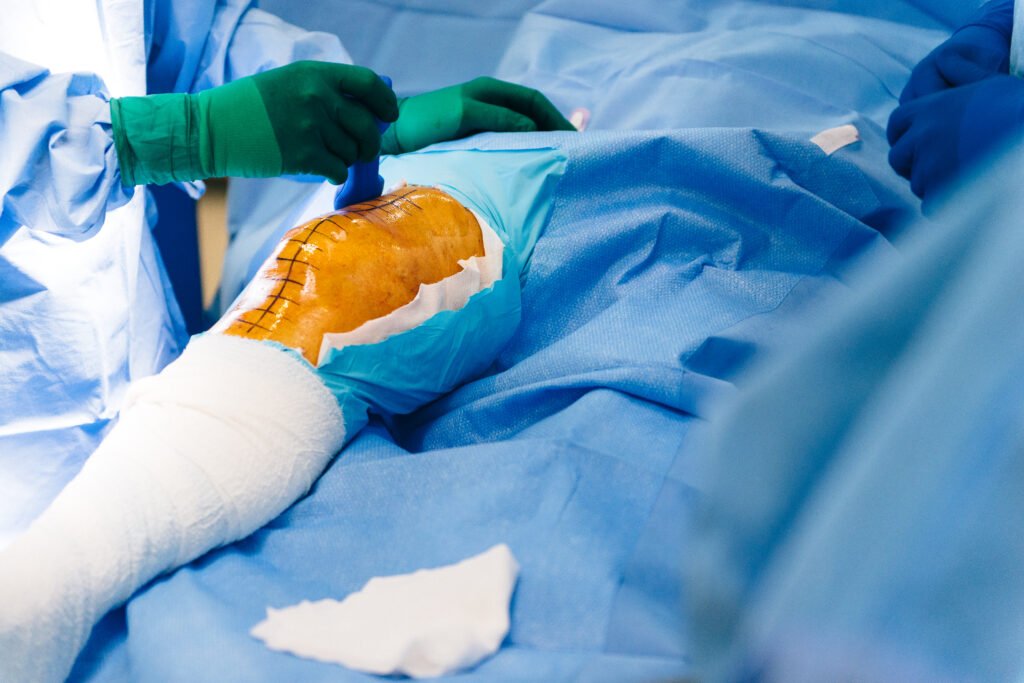
Total knee replacement (arthroplasty) is performed to treat advanced joint damage, with the aim of improving pain, movement, and overall knee function. The procedure is typically performed under general or regional anaesthesia, so you will be comfortable throughout. You will be positioned carefully to allow access to the knee.
During the operation:
- An incision is made at the front of the knee to access the joint
- Dr tulloch carefully removes the damaged cartilage and a small amount of underlying bone from the femur, tibia, and, where appropriate, the patella
- The joint surfaces are prepared to allow accurate placement of the implants
- Specialised components are positioned to resurface the joint and restore alignment
These components are designed to allow smooth movement and even distribution of load across the knee.
Once the implants are in place, the knee is assessed for alignment, stability, and range of motion. The incision is then closed and dressed, and you will be transferred to recovery for monitoring.
The procedure is carefully planned based on your individual anatomy and joint condition, with the aim of restoring function while maintaining stability.
Understanding the risks and considerations
All surgical procedures carry potential risks, and total knee replacement (arthroplasty) is no exception. Understanding these risks and considerations can help you make an informed decision about your care.
Some risks are common to most operations and may include:
- Infection
- Bleeding
- Blood clots (deep vein thrombosis or pulmonary embolism)
- Reactions to anaesthesia
There are also considerations specific to total knee replacement. These may include:
- Persistent pain or incomplete relief of symptoms
- Stiffness or reduced range of motion
- Instability, where the knee does not feel fully supported
- Implant wear or loosening over time
- Nerve or blood vessel irritation, which is uncommon
In some cases, further treatment or revision surgery may be required if complications develop or if the implant does not perform as expected.
Recovery and outcomes can vary depending on your overall health, joint condition, and adherence to rehabilitation.
What to expect after surgery
Recovery after total knee replacement (arthroplasty) is a structured and progressive process, focused on managing pain, restoring movement, and gradually returning to daily activities.
Hospital stay
Most patients stay in hospital for 2–3 days following surgery for monitoring and initial recovery, although this can vary depending on your individual progress.
Pain management
It is common to experience pain, swelling, and stiffness in the early stages. These symptoms are managed with:
- Medications prescribed by your care team
- Cold therapy (ice) to reduce swelling
- Elevation of the leg to support circulation
Assistive devices and mobility
You will usually begin mobilising soon after surgery, often on the same day or the following day with the support of a physiotherapist.
Crutches or a walker may be needed during the initial recovery period to assist with walking and reduce pressure on the knee.
Discharge instructions
Before leaving hospital, you will receive guidance on:
- Wound care and dressing management
- Activity restrictions and safe movement
- Managing pain and swelling
- Recognising signs of complications
Early movement is encouraged, and you will begin a physiotherapy program to help restore range of motion, strength, and function.
Recovery progresses over time, with gradual improvement in mobility, comfort, and confidence. The pace of recovery can vary depending on your overall health, fitness, and response to rehabilitation.
Rehabilitation and recovery after surgery
Rehabilitation following total knee replacement (arthroplasty) is a key part of your recovery, focused on restoring movement, strength, and confidence in the knee while supporting healing.
In the early stages after surgery, the priority is to regain range of motion and begin walking safely. You will start a structured physiotherapy program soon after surgery, with exercises designed to improve flexibility, circulation, and muscle activation. Walking is encouraged early, often with the support of crutches or a walker, progressing as your strength and confidence improve.
As recovery progresses, rehabilitation focuses on rebuilding muscle strength, particularly in the quadriceps and surrounding hip muscles, as well as improving balance and movement control. This helps support everyday activities such as walking, climbing stairs, and standing for longer periods.
During the early stages, you will be advised to avoid high-impact activities to protect the joint while it heals. Activity levels are gradually increased based on your progress and symptoms.
Recovery timeline
Recovery after total knee replacement is typically progressive over several weeks to months. Many patients notice improvement in pain and mobility within the first 6–12 weeks, with continued gains in strength and function over time. Full recovery can vary between individuals and may take several months.
Ongoing participation in your physiotherapy program and maintaining an active, healthy lifestyle can support long-term outcomes.
Dr Scott Tulloch will monitor your progress and provide individualised guidance, working closely with your physiotherapy team to support a safe and gradual return to activity.
Long-term outcomes after total knee replacement
Long-term outcomes following total knee replacement (arthroplasty) are influenced by a number of factors, including your overall health, activity level, joint condition, and participation in rehabilitation. Many patients experience improvement in knee pain and mobility, which can support a return to daily activities such as walking, work, and low-impact exercise. The aim of the procedure is to improve function and quality of life, although results can vary between individuals.
The implant components used in total knee replacement are designed to be durable, with many lasting 15–20 years or longer. Longevity can be influenced by factors such as activity level, body weight, general health, and how the joint is used over time.
It is important to understand that:
- Function and comfort may change over time
- The implant may be subject to wear or loosening
- Some patients may require further treatment or revision surgery in the future
Regular follow-up appointments are recommended to monitor the condition of the knee and implant, particularly if any new symptoms develop.
Maintaining a healthy, active lifestyle, including participation in appropriate physiotherapy and low-impact exercise, may help support joint function and the longevity of the replacement.
If you would like to discuss your knee or explore treatment options, you can arrange a consultation with Dr Scott Tulloch for an individualised assessment and advice based on your situation.