
Knee Ligament Injuries | MCL, LCL, PCL and Complex Injuries
Injury to the knee ligaments causing pain, instability, and reduced joint control
Knee ligament injuries involve damage to one or more of the key ligaments that provide stability and control to the knee joint, including the medial collateral ligament (MCL), lateral collateral ligament (LCL), and posterior cruciate ligament (PCL). In some cases, multiple ligaments may be affected, resulting in more complex knee injuries.
Knee ligament injuries can occur through sporting activities, trauma, or direct impact, and may range from mild sprains to complete ligament tears. Complex injuries involving multiple ligaments often result from higher energy trauma and may require more detailed assessment and management.
Early assessment is important to determine the extent of the injury and guide appropriate management, supporting your knee stability, function, and recovery over time.
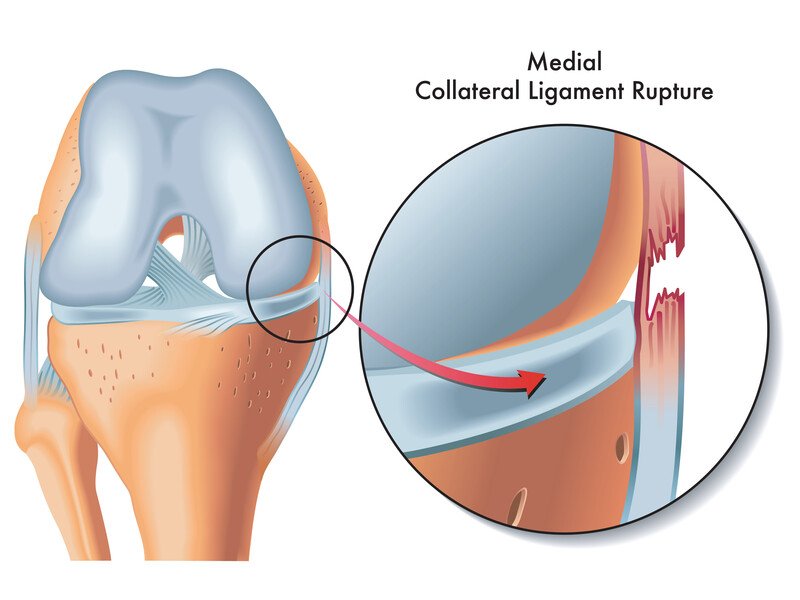
What are MCL, LCL, PCL, and complex knee ligament injuries?
Knee ligament injuries involve damage to the structures that help stabilise and control movement of the knee joint. The main ligaments affected include the medial collateral ligament (MCL), lateral collateral ligament (LCL), and posterior cruciate ligament (PCL). Each plays a different role in maintaining joint stability and alignment.
- The MCL is located on the inner side of the knee and helps resist forces that push the knee inward. Injuries to the MCL are often caused by a direct blow to the outside of the knee or a twisting movement.
- The LCL sits on the outer side of the knee and helps stabilise the joint against forces pushing the knee outward. LCL injuries are less common and are usually associated with higher-energy trauma or more complex injury patterns.
- The PCL is located inside the knee joint and helps control the backward movement of the shin bone (tibia) relative to the thigh bone (femur). PCL injuries often occur with direct impact to the front of the knee, such as in sporting collisions or motor vehicle accidents.
In some cases, more than one ligament may be injured at the same time. These are referred to as complex or multi-ligament knee injuries and can involve a combination of the MCL, LCL, PCL, and other supporting structures. These injuries are typically more severe and may significantly affect the stability and function of the knee.
The severity of ligament injuries can range from a mild sprain, where the ligament is stretched, to a complete tear, where the ligament is fully disrupted.
Common causes of knee ligament injuries
Knee ligament injuries most often occur when the joint is exposed to sudden force, twisting, or instability, particularly during activities that place stress on the knee. In many cases, these injuries happen during sporting activities, especially those that involve pivoting, sudden changes in direction, jumping, or rapid deceleration. When the foot is planted and the body moves in a different direction, this can place significant strain on the ligaments.
Common causes include:
- Twisting or pivoting movements, particularly with the foot fixed on the ground
- Direct impact to the knee, such as a blow from the side during contact sports
- Sudden stops or changes in direction, which can overload the ligaments
- Landing awkwardly from a jump, especially if the knee collapses inward or outward
- Falls or high-impact trauma, including sporting injuries or accidents
Different ligaments are often injured in different ways. For example:
- The MCL is commonly injured by a force applied to the outside of the knee, pushing it inward
- The LCL may be injured by a force applied to the inside of the knee, pushing it outward
- The PCL is often injured by a direct blow to the front of the knee, such as during a fall or collision
More severe or high-energy injuries may involve damage to multiple ligaments at once, resulting in complex knee injuries that affect overall joint stability. In some cases, ligament injuries may also be influenced by factors such as muscle weakness, poor movement patterns, or fatigue, which can affect how the knee absorbs force during activity.
Symptoms of knee ligament injuries
Symptoms of knee ligament injuries can vary depending on the ligament involved and the severity of the injury, ranging from mild discomfort to significant instability of the joint. At the time of injury, many people experience a sudden pain in the knee, sometimes accompanied by a popping sensation or sound. This may be followed by swelling, which can develop within hours.
Common symptoms include:
- Pain in the knee, particularly with movement or weight-bearing
- Swelling and stiffness, which may limit movement
- Reduced range of motion, making it difficult to fully bend or straighten the knee
- Tenderness along the inner or outer side of the knee, depending on the ligament involved
- A feeling of instability or the knee “giving way”, especially during walking or turning
Symptoms can differ depending on the specific ligament injured:
- MCL injuries often cause pain and tenderness along the inner side of the knee
- LCL injuries may cause pain along the outer side of the knee and can be associated with instability
- PCL injuries may present with less obvious swelling but can cause a feeling of the knee being unstable or not functioning normally, particularly when walking downhill or descending stairs
In more complex or multi-ligament injuries, symptoms may be more severe and can include significant instability, difficulty bearing weight, and marked swelling.
Risk factors for knee ligament injuries
A number of factors can increase the likelihood of sustaining knee ligament injuries, particularly during activities that involve pivoting, jumping, or sudden changes in direction. These risk factors relate to a combination of physical conditioning, movement patterns, and individual anatomy.
Common risk factors include:
- Participation in high-demand sports, such as football, netball, basketball, skiing, or rugby
- Previous knee injury, which may affect joint stability and increase the risk of re-injury
- Muscle weakness or imbalance, particularly in the quadriceps, hamstrings, and hip muscles
- Poor movement mechanics, such as the knee collapsing inward during landing or pivoting
- Reduced neuromuscular control, affecting coordination, balance, and reaction time
- Fatigue, which can affect technique and increase injury risk during activity
Certain anatomical factors may also contribute, including variations in knee alignment, ligament structure, or joint flexibility, which can influence how forces are transmitted through the knee.
In some populations, differences in movement patterns and muscle activation may also affect injury risk.
Treatment options for knee ligament injuries
Management of knee ligament injuries is tailored to your symptoms, the ligament involved, the severity of the injury, and your activity goals. Treatment may be non-surgical or surgical, depending on how stable your knee is and the demands you place on it. Non-surgical treatment options may be appropriate for many ligament injuries, particularly mild to moderate sprains or injuries where the knee remains stable.
These may include:
- Rest and activity modification, allowing the ligament to heal
- Physiotherapy, focusing on restoring strength, movement, and stability
- Bracing, where appropriate, to support the knee during recovery
- A structured rehabilitation program, aimed at improving joint control and function
Some ligaments, such as the MCL, often respond well to non-surgical management, particularly when the injury is not severe.
If the knee remains unstable, or if you wish to return to pivoting sports or higher-demand activities, surgical treatment may be considered.
This may include:
- Ligament reconstruction, where the damaged ligament is replaced with a graft (commonly used for PCL or multi-ligament injuries)
- Ligament repair, in selected cases depending on the type and location of the injury
- Combined procedures for multi-ligament injuries, where more than one structure is addressed
Surgical treatment may also be recommended if there are associated injuries, such as damage to the meniscus, cartilage, or other stabilising structures of the knee.
When to seek medical advice for knee ligament injuries
It is important to seek medical advice if you experience a knee injury associated with pain, swelling, or instability, particularly after a twisting movement, fall, or direct impact.
You may benefit from an assessment if you notice:
- A “popping” sensation at the time of injury
- Rapid swelling of the knee within a few hours
- Pain with movement or weight-bearing
- Reduced range of motion, making it difficult to bend or straighten the knee
- A feeling that the knee is giving way, shifting, or unstable
- Difficulty walking or returning to normal activity
Some ligament injuries may initially seem mild, but underlying damage can still affect the stability and function of the knee. Early assessment can help determine the extent of the injury and guide appropriate management. It is particularly important to seek prompt review if you are planning to return to sport or higher-level activity, or if your knee does not feel stable during everyday movements.
Dr Scott Tulloch will perform a comprehensive assessment, which may include imaging such as MRI, to determine the nature of the injury and discuss the most appropriate treatment options based on your individual needs.