
Avascular Necrosis of the Knee
Loss of blood supply to the knee bone leading to pain, joint damage, and reduced movement
Avascular necrosis of the knee is a condition where a portion of the bone within the knee joint loses its normal blood supply, leading to weakening of the bone and potential damage to the overlying cartilage. When the blood supply is reduced, the affected area of bone may begin to break down or collapse, which can affect how the joint functions.
Over time, this may lead to pain, swelling, and reduced movement, and in some cases contribute to the development of joint degeneration. Avascular necrosis can develop for a number of reasons, including previous injury, certain medications, or underlying medical conditions, although in some cases no clear cause is identified. Symptoms may begin gradually, often presenting as activity related pain, but can progress if the condition advances.
Early assessment is important to identify the extent of bone involvement and guide appropriate management, supporting joint function and long-term knee health.
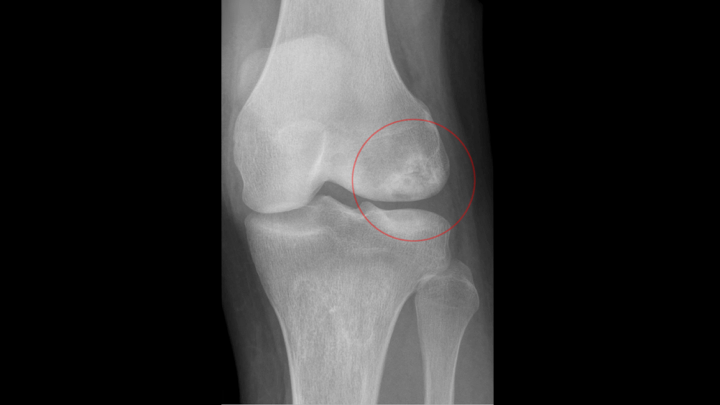
What is avascular necrosis of the knee?
Avascular necrosis (AVN) of the knee is a condition where a portion of the bone within the knee joint loses its normal blood supply. Without an adequate blood supply, the bone tissue can become weakened, and over time may begin to break down or collapse.
The most commonly affected area is the end of the thigh bone (femur) within the knee joint, although other parts of the knee can also be involved. As the underlying bone becomes compromised, the cartilage covering the joint surface may also be affected, which can impact how smoothly the knee moves.
In the early stages, the bone structure may remain intact, but as the condition progresses, there may be changes in the shape of the joint surface, which can lead to pain, swelling, and reduced movement. In more advanced cases, this may contribute to joint degeneration over time.
Avascular necrosis can develop gradually and may initially present with activity-related discomfort, although symptoms can become more persistent as the condition progresses.
Common causes of avascular necrosis of the knee
Avascular necrosis (AVN) of the knee occurs when the blood supply to a portion of bone is reduced or disrupted, leading to weakening of the bone over time. In some cases, a clear cause can be identified, while in others the condition may develop without a single obvious trigger.
Common causes and contributing factors include:
- Previous injury or trauma, such as fractures or significant impact to the knee, which may affect blood flow to the bone
- Use of corticosteroid medications, particularly with long-term or high-dose use
- Excessive alcohol intake, which can affect blood supply and bone health
- Certain medical conditions, including blood disorders or conditions that affect circulation
- Repetitive stress or loading, which may contribute to changes in the underlying bone over time
In some individuals, avascular necrosis may develop without a clearly identifiable cause. This is sometimes referred to as idiopathic AVN. The condition is often influenced by a combination of factors that affect the health of the bone and its blood supply, rather than a single event.
Symptoms of avascular necrosis of the knee
Symptoms of avascular necrosis (AVN) of the knee can develop gradually and may vary depending on the stage of the condition and the extent of bone involvement. In the early stages, symptoms may be mild and often occur with weight-bearing or activity, but they can become more persistent as the condition progresses.
Common symptoms include:
- Knee pain, often localised to one area of the joint
- Pain that is worse with walking, standing, or activity
- Swelling around the knee
- Stiffness or reduced range of motion
- Discomfort that may persist even at rest in later stages
As the condition advances and the affected bone weakens, you may also experience:
- Increasing pain that limits daily activities
- A feeling of the knee being less stable or not functioning normally
- Difficulty with weight-bearing, particularly over longer periods
Symptoms can gradually worsen over time, especially if there are changes to the joint surface or underlying bone structure.
Risk factors for avascular necrosis of the knee
Common risk factors include:
- Previous injury or trauma to the knee, which may disrupt blood flow to the bone
- Long-term or high-dose corticosteroid use, which can affect bone circulation
- Excessive alcohol intake, which may impact blood supply and bone integrity
- Certain medical conditions, such as blood disorders or conditions affecting circulation
- Smoking, which can reduce blood flow and impair healing
- Increased body weight, which may place additional stress on the joint
Additional factors that may contribute include:
- Repetitive stress or loading through the knee joint
- Previous joint conditions or surgery, which may affect the local blood supply
- Individual variation in bone health or circulation
In some cases, avascular necrosis can develop without a clearly identifiable risk factor, particularly in otherwise healthy individuals.

Treatment options for avascular necrosis of the knee
Management of avascular necrosis (AVN) of the knee depends on the stage of the condition, the size of the affected area, your symptoms, and overall health. The aim is to reduce pain, support the bone, and preserve joint function where possible. Non-surgical treatment options may be considered in the early stages, particularly when the bone structure remains intact.
These may include:
- Activity modification, reducing high-impact or weight-bearing activities
- Protected weight-bearing, in some cases using crutches to reduce load on the knee
- Physiotherapy, to maintain joint movement and support surrounding muscle strength
- Pain relief medications and anti-inflammatory treatments
- Monitoring with imaging, to assess progression of the condition over time
These approaches aim to support the joint while the bone stabilises, although they may not reverse the underlying changes.
If the condition progresses or symptoms become more significant, surgical treatment options may be considered.
These can include:
- Core decompression, a procedure to relieve pressure within the bone and potentially support blood flow in selected cases
- Bone grafting, to support areas of weakened bone
- Joint-preserving procedures, where appropriate depending on the stage of the condition
In more advanced cases, where there is collapse of the joint surface or significant cartilage damage, joint replacement surgery may be considered to restore movement and function. The most appropriate treatment depends on factors such as the extent of bone involvement, stability of the joint, and your functional needs.
When to seek medical advice for avascular necrosis of the knee
It is important to seek medical advice if you are experiencing persistent or unexplained knee pain, particularly if it is worsening over time or affecting your ability to walk, stand, or stay active.
You may benefit from an assessment if you notice:
- Ongoing knee pain, especially with weight-bearing activities
- Pain that is gradually increasing or becoming more constant
- Swelling or stiffness in the knee
- Reduced range of motion, making it difficult to fully bend or straighten the knee
- Discomfort that begins to affect daily activities or sleep
It is particularly important to seek review if you have known risk factors, such as a history of previous knee injury, corticosteroid use, or medical conditions affecting circulation, and develop new or persistent knee symptoms. Even in the absence of a clear injury, early symptoms of avascular necrosis can be subtle. Early assessment may help identify the condition before more significant changes occur within the bone.
Dr Scott Tulloch will perform a comprehensive assessment, which may include imaging such as X-rays or MRI, to determine the cause of your symptoms and discuss appropriate management options based on your individual needs.