
Knee Arthritis
Degeneration of the knee joint cartilage leading to pain, stiffness, and reduced movement
Knee arthritis is a condition where the protective cartilage within the knee joint gradually wears down over time. This cartilage normally allows the joint surfaces to move smoothly and without friction. As it deteriorates, the joint may become painful, stiff, and less mobile.
The condition most commonly develops with age-related changes, but it can also occur following previous injury, increased joint loading, or underlying joint conditions. As the cartilage thins, the bones within the knee may begin to move less smoothly against each other, which can affect how the joint functions.
Symptoms can range from mild discomfort to more persistent pain, often impacting activities such as walking, climbing stairs, standing for long periods, or rising from a seated position. Over time, knee arthritis may begin to affect your mobility, independence, and ability to stay active.
Early assessment can help identify the cause of your symptoms and guide appropriate management, supporting your function and quality of life over time.
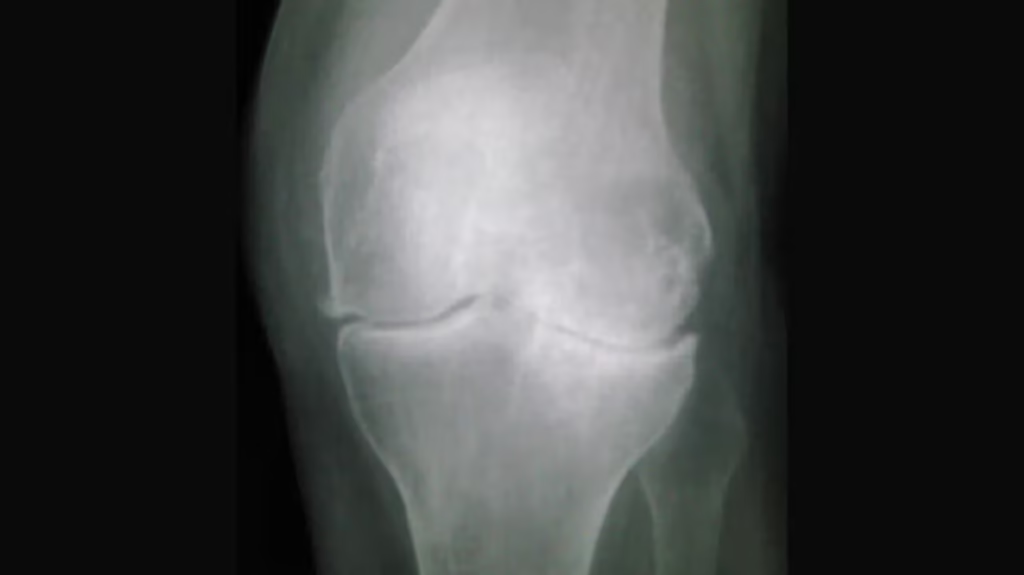
What is knee arthritis?
Knee arthritis is a condition where the protective cartilage within the knee joint gradually wears down over time. This cartilage normally allows the joint surfaces to move smoothly and with minimal friction during everyday activities.
As the cartilage becomes thinner, the joint may become less cushioned, which can lead to pain, stiffness, and reduced movement. Over time, the surrounding bone and soft tissues may also be affected, contributing to changes in how the knee functions.
The most common form is osteoarthritis, which is associated with age-related wear and tear, although knee arthritis can also develop following previous injury, joint instability, or other underlying conditions.
Knee arthritis can affect one or both knees and may develop gradually. Symptoms often begin as intermittent discomfort and may progress to more persistent pain that affects activities such as walking, climbing stairs, or standing for longer periods.
Early assessment can help identify the cause of your symptoms and guide appropriate management to support your mobility and joint function over time.
Common causes of knee arthritis
Knee arthritis most commonly develops due to a combination of age-related changes, joint loading, and previous injury. Over time, these factors can contribute to the gradual breakdown of the cartilage within the knee joint.
Some of the more common causes include:
- Age-related wear and tear (osteoarthritis), where the cartilage gradually thins over time
- Previous knee injury, such as ligament tears, meniscal damage, or fractures, which can alter joint mechanics
- Repetitive stress or overuse, particularly in occupations or activities that involve frequent kneeling, squatting, or heavy loading
- Joint misalignment, where uneven forces are placed across the knee, leading to increased wear in certain areas
- Obesity or increased body weight, which can place additional load on the knee joint over time
- Inflammatory conditions, such as rheumatoid arthritis, which can affect the joint lining and cartilage
In many cases, knee arthritis develops gradually due to a combination of these factors rather than a single cause.
Understanding the underlying cause of your symptoms can help guide appropriate management and treatment options aimed at supporting joint function and mobility.
Symptoms of knee arthritis
Symptoms of knee arthritis can develop gradually and may vary in severity depending on the extent of joint changes. Early on, symptoms may be mild and intermittent, but they can become more noticeable over time.
Common symptoms include:
- Pain in the knee, particularly during or after activity
- Stiffness, especially in the morning or after periods of rest
- Swelling around the joint
- Reduced range of motion, making it difficult to fully bend or straighten the knee
- A feeling of grinding, clicking, or catching within the joint
- Difficulty with weight-bearing activities, such as walking, climbing stairs, or standing for long periods
Some people may also notice that symptoms vary throughout the day, often worsening with increased activity and improving with rest.
As the condition progresses, knee arthritis may begin to affect mobility, balance, and overall function, making everyday activities more challenging.
If symptoms persist or begin to impact your daily life, further assessment can help guide appropriate management and treatment options.
Risk factors for knee arthritis
A number of factors can increase the likelihood of developing knee arthritis. These risk factors may relate to your age, lifestyle, previous injuries, and joint structure.
Common risk factors include:
- Increasing age, as cartilage naturally changes over time
- Previous knee injury, such as ligament tears, meniscal damage, or fractures
- Excess body weight, which increases the load placed on the knee joint
- Repetitive stress or occupational demands, including frequent kneeling, squatting, or heavy lifting
- Joint alignment, where uneven loading across the knee can contribute to wear in specific areas
- Muscle weakness, particularly around the quadriceps and hip, which support knee stability
- Family history, which may influence joint health and cartilage resilience
- Inflammatory conditions, such as rheumatoid arthritis, affecting the joint lining and cartilage
In many cases, knee arthritis develops due to a combination of these factors rather than a single cause.
Understanding your individual risk factors can help guide prevention strategies and treatment decisions, particularly when symptoms first develop.

Treatment options for knee arthritis
Treatment for knee arthritis is tailored to your individual symptoms, level of joint damage, lifestyle, and overall health. In many cases, a combination of non-surgical and surgical options may be considered to help manage pain and improve function.
Non-surgical treatment options are often the first step and may include:
- Activity modification and load management to reduce stress on the joint
- Physiotherapy to improve strength, flexibility, and joint support
- Weight management, where appropriate, to reduce pressure on the knee
- Pain relief medications and anti-inflammatory treatments
- Injections, such as corticosteroids or other therapies, to help manage symptoms
For some patients, Coolief radiofrequency ablation may be considered. This is a minimally invasive procedure that targets the sensory nerves around the knee using controlled radiofrequency energy. By disrupting pain signals, it may provide temporary pain relief for patients who are not ready for, or may not be suitable for, knee replacement surgery. The duration and effectiveness of relief can vary between individuals.
If symptoms progress or are no longer well managed with non-surgical care, surgical treatment options may be discussed. These can include:
- Arthroscopic procedures in select cases
- Osteotomy, which involves realigning the bones to offload the affected part of the joint
- Partial (unicompartmental) knee replacement, where only the damaged section of the knee is replaced
- Total knee replacement, where the entire joint surface is replaced
The most appropriate treatment depends on factors such as the severity of arthritis, alignment of the knee, your activity level, and your overall health.
When to seek medical advice for knee arthritis
It is appropriate to seek medical advice if you are experiencing persistent knee pain, stiffness, or reduced movement that is affecting your daily activities or ability to stay active.
You may benefit from an assessment if you notice:
- Ongoing knee pain, particularly with walking, standing, or climbing stairs
- Stiffness, especially in the morning or after periods of rest
- Swelling around the knee joint
- Reduced range of motion, making it difficult to fully bend or straighten the knee
- Symptoms that are progressively worsening over time
- Pain that interferes with sleep or regular activity
- Limited improvement with physiotherapy, medications, or other treatments
In some cases, symptoms may develop gradually and be mistaken for general wear and tear. Early assessment can help identify the cause of your symptoms and guide appropriate management, particularly before symptoms begin to significantly impact your mobility and function.
Dr Scott Tulloch will perform a comprehensive assessment, which may include imaging such as X-rays, to determine the extent of arthritis and discuss the most appropriate treatment options based on your individual needs.